Börneplatz Memorial
Commemorating Frankfurt's Jewish community and 11,908 victims of the Holocaust
One of Germany's most poignant memorials to victims of the Holocaust sits on Börneplatz in Frankfurt, four blocks north of the Main. The memorial sits on land that had been home to Frankfurt’s Jewish community — one of the largest in Germany — for centuries.
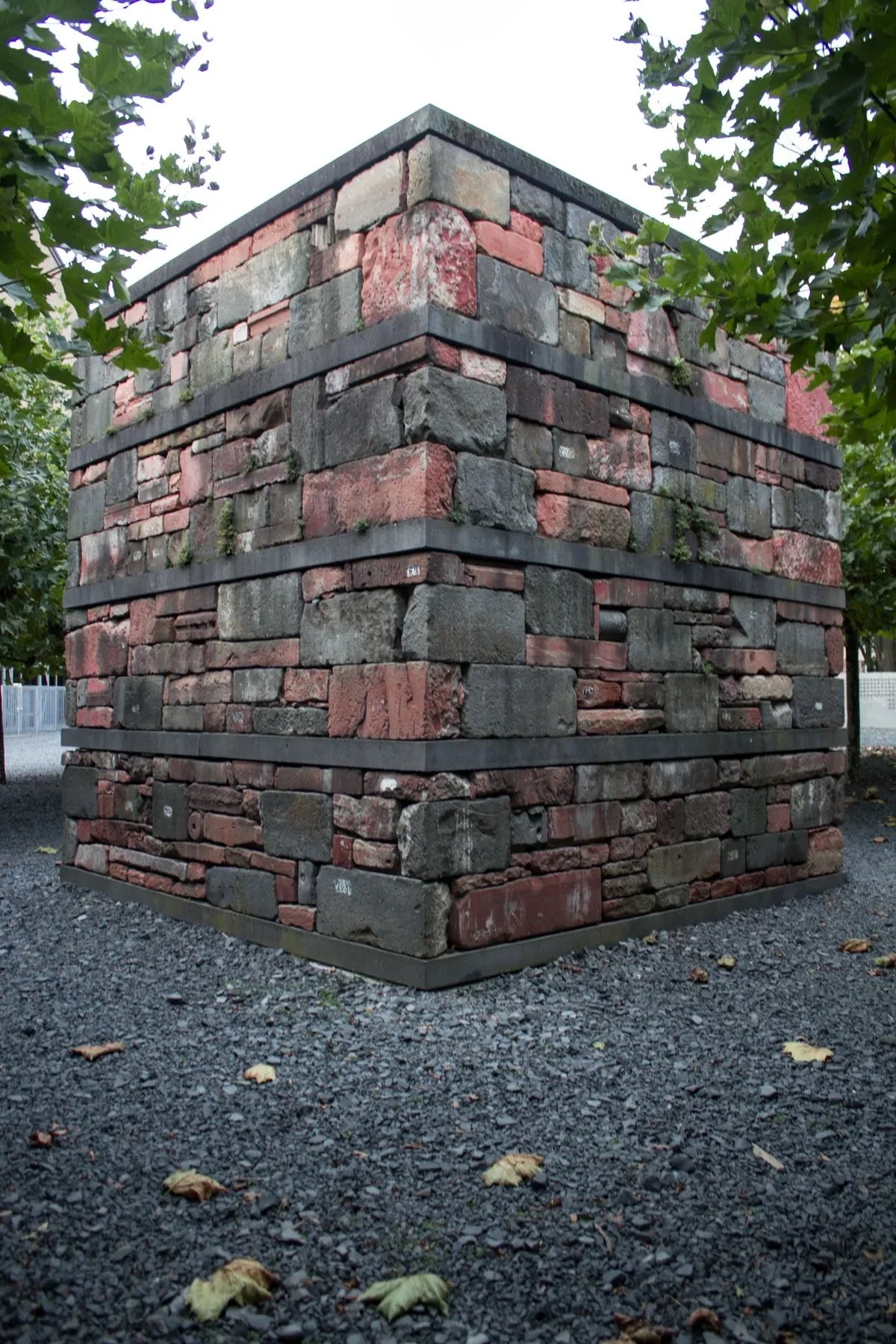
The site consists of several components. At its center stands a stone cube, 5 meters by 5 meters (about 16 feet by 16 feet), built from remnants of buildings in the Judengasse, the old Jewish Ghetto. A steel band outlines part of the footprint of the Börneplatz Synagogue, which was destroyed on Kristallnacht (November 9, 1938). A plaque on the wall describes this destruction in German and English.
Along Rechneigrabenstrasse, on the southern edge, stand five street signs commemorating the names by which the area was known: Judenmarkt (16th Century–1885); Börneplatz (1885–1935); Dominkanerplatz (1935–1978); Börneplatz again (1978–1987) and Neuer Börneplatz (since 1996).
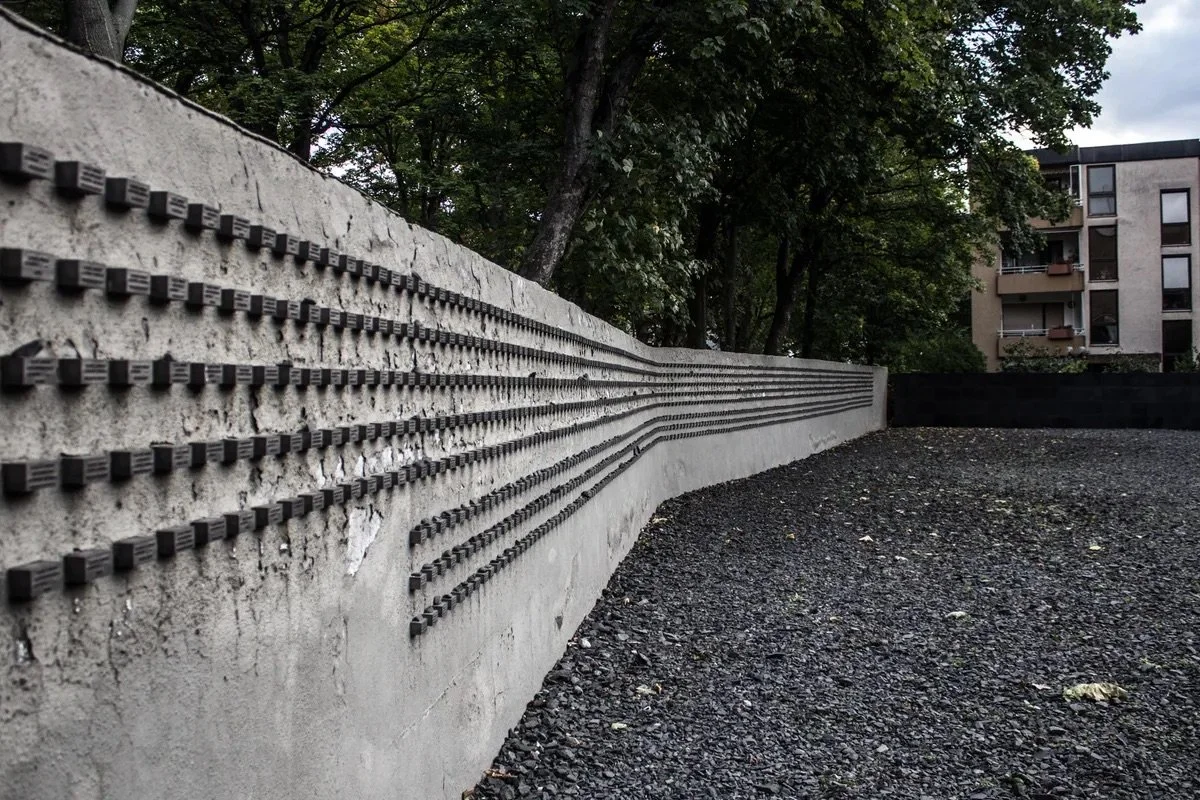
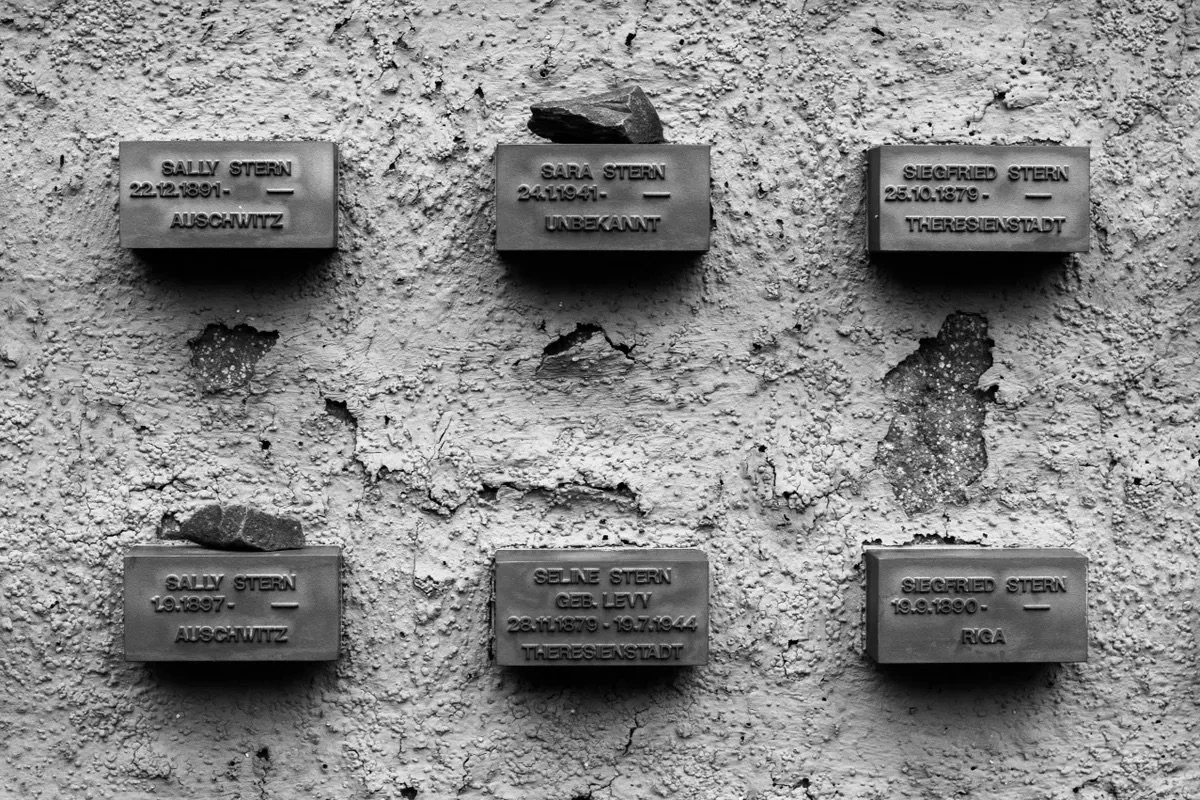
At the northern rim of the memorial is a wall, surrounding the old Jewish cemetery along Battonnstrasse. On the wall are mounted 11,908 steel blocks, each bearing a name and (if known) dates of birth and death of Frankfurt Jews murdered during the Shoah. Among them are the diarist Anne Frank, her sister Margot, and her mother, Edith Holländer Frank.
Next door, the Museum Judengasse — which is built over remnants of the original Judengasse — explores the experiences of Frankfurt’s Jewish community, from its origins in the Middle Ages through the present day. Permanent exhibitions detail Jewish art, culture, and the destruction of the community by the Nazis.